The Voice Files · Part 3 of 5
When the Voice Started Revealing the Body
The moment researchers stopped asking "is he lying?" and started asking "is she ill?" — and found that disease can leave fingerprints in the sound of a voice.
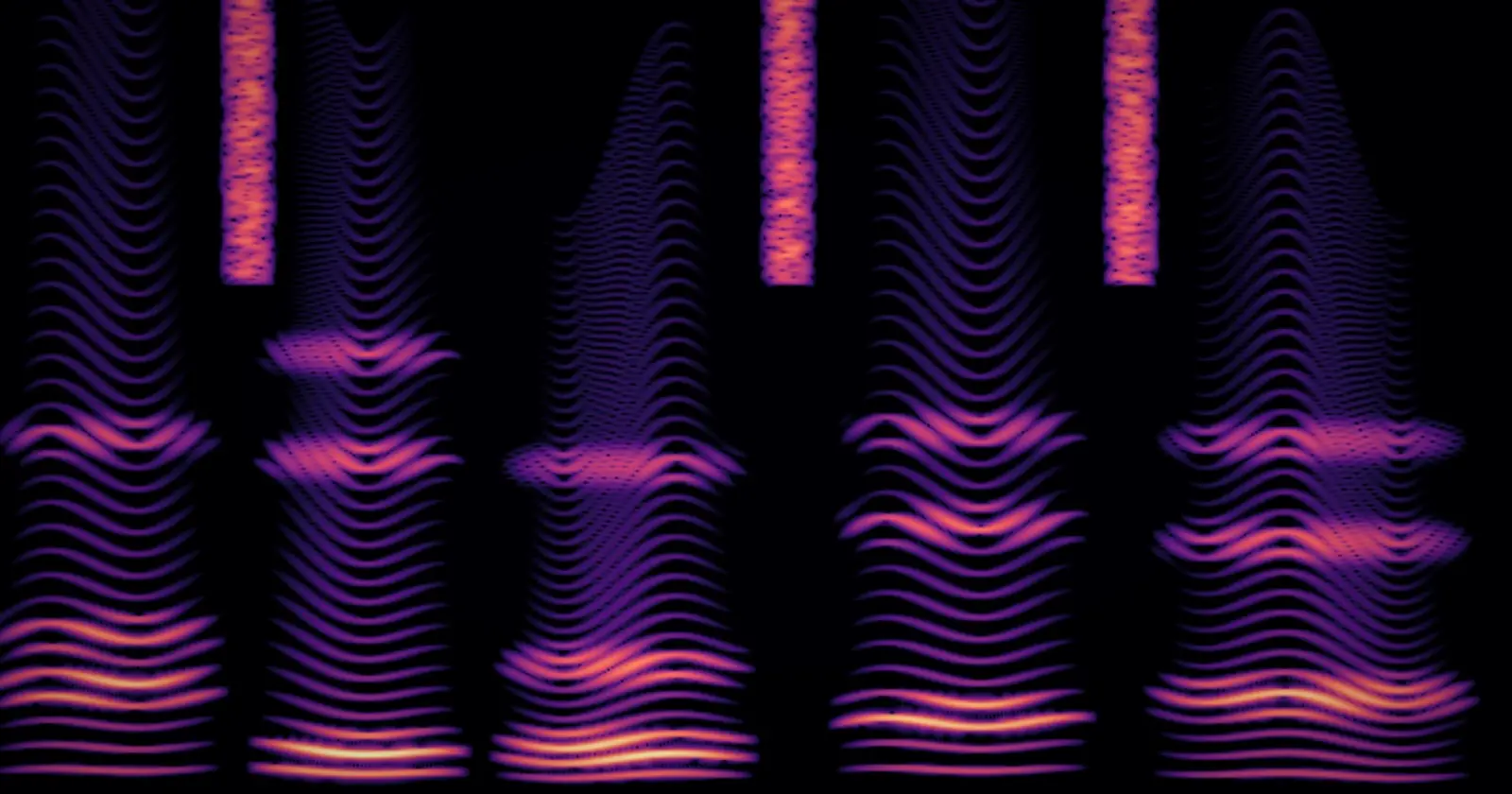
Part 2 left us with a machine that half-worked. The Cold War lie detectors could pick up stress in a voice but kept failing at the thing they were sold for — catching a liar — because being stressed and being dishonest are not the same thing. The voice was clearly leaking a real inner signal. The spies had simply aimed it at the wrong target.
So here is the question that changes everything, the one that took a generation to ask out loud: if the voice carries the state of your nervous system, your muscles, your breath — what else is riding along in there besides your mood?
You already know part of the answer, the same way you knew you could hear a lie. You can hear a cold before someone mentions it. You can hear exhaustion, the flat heaviness in a tired voice. You've picked up the phone to a relative and thought, before a single fact was exchanged, something is wrong with them — and been right. We treat that, again, as instinct. A handful of scientists decided to treat it as data. What they found turned voice analysis from a spy's gadget into something that might one day matter to you and the people you love.
A mathematician, a phone call, and Parkinson's
The turning point has a name, and it's not a spy agency. It's an applied mathematician named Max Little.
In the mid-2000s, Little was finishing a PhD at Oxford on the mathematics of voice signals — abstract work in search of a worthy problem. Then came one of those chance encounters that rewrite a career. Researchers at Intel had a pile of data and didn't know what to do with it. The company's legendary early leader, Andy Grove, had been diagnosed with Parkinson's disease, and — frustrated that there was no objective, day-to-day way to measure how the illness was progressing — had backed an effort to find one. Intel's team had recorded thousands of voice samples from people with Parkinson's and healthy volunteers, then hit a wall: they didn't know how to turn the sound into an answer.
Little did. The logic was elegant. Parkinson's attacks muscle control throughout the body — and the vocal cords are muscle. Long before the famous hand tremor is obvious, the disease tends to leave subtle marks in the voice: a faint instability, a loss of steadiness and strength, a change in the fine texture of the sound. Those marks are too subtle for a listener to be sure of. They are not too subtle for the right algorithm.
He ran his mathematics across Intel's orphaned recordings. His first pass separated people with Parkinson's from healthy controls at around 86% accuracy. As the work matured in later studies on carefully controlled recordings, that figure climbed toward 99% — all from a short voice sample. No needle, no scan, no clinic. In principle, a thirty-second phone call.
Parkinson's from a short voice sample
In 2012 Little took the idea to a TED stage and turned it into a movement: the Parkinson's Voice Initiative, a global call — literally — for ordinary people, with the disease and without it, to phone a local number and donate a few seconds of their voice. He needed about ten thousand samples to prove the technique held up outside the lab. The phones lit up; the voices poured in from around the world.
Now, the honest part, because it's the part that makes this credible rather than hype. Those headline accuracy numbers came from trials, often on carefully controlled recordings, not from a settled, regulator-approved clinical test you can walk in and take today. Little himself has been careful not to oversell it. And the most exciting possibility of all — that the voice might change before a person is ever diagnosed, acting as an early-warning whisper — he has openly described as something the evidence only hints at, not something proven. That restraint is exactly why his work is taken seriously. He pointed at a door. He didn't claim to have walked all the way through it.
But the door was open now. And once it was, people started looking through it at everything.
The voice of a heavy mind
Turn the same lens toward mental health and the picture gets quietly profound.
Researchers studying depression have documented a consistent acoustic signature: a depressed voice tends to slow down, to flatten in pitch and energy, to fall into more frequent and longer pauses — the audible weight of a mind moving through mud. Clinicians have put it simply: depressed patients take more pauses and stop more often. None of this requires the patient to describe their feelings; it shows up in how they speak, regardless of what they say.
The acoustic signature of a heavy mind
This isn't new ambition — it's old ambition finally meeting capable tools. Decades ago, inventors were already filing patents on the idea of detecting something as grave as suicidal risk from the qualities of a voice. For most of that history the dream outran the technology. What changed in the last fifteen years is that the mathematics, the computing power, and the sheer volume of recorded speech finally caught up. Careful academic reviews now trace a real, if still-maturing, body of evidence linking acoustic features to depression and to suicide risk — promising, far from perfect, and taken seriously enough to be studied hard.
A whole-body readout
Then the search widened past the brain entirely, and this is where the scope of it becomes almost startling.
Your voice is not produced by your throat alone. It rides on your breath, which means it carries information about your lungs and the heart and circulation driving them. It's shaped by fine muscle timing, which means it reflects the nervous system. It depends on the soft tissues of the airway, which swell and stiffen with inflammation and illness. The voice is, in a real sense, a status report from half the systems in your body, broadcast every time you speak.
One signal, many systems
So researchers began listening for physical disease. Studies have probed whether respiratory conditions like asthma and COPD leave audible traces. Whether the strain of cardiovascular disease shows up in the sound. When the COVID-19 pandemic hit, teams around the world raced to hear the infection in coughs and voices. The honest status of all this is the same phrase that keeps recurring in the serious literature: the evidence is scant but growing. These are promising signals, actively being tested — not finished diagnostic tests.
But step back and the unifying insight is the genuinely important takeaway of this entire series. A single, free, effortless signal — the sound of you talking — touches your brain, your nerves, your muscles, your lungs, your heart, your mood. That is why the voice can hint at so many different things. And it is also exactly why no voice analysis can ever be a diagnosis: a signal that touches everything is, by nature, an indicator — a direction to look, a reason to pay attention — never a verdict. The most rigorous people in this field are the ones who say that loudest.
Who is it for?
Notice what just happened to the technology in the space of one generation.
The spies wanted to use it on people — on a suspect, without consent, to extract a hidden truth. Medicine flipped the polarity. It wants to use it for people — to give someone an early, gentle, non-invasive heads-up about their own body.
And the most powerful version of "for people" isn't a one-time test you take in a clinic on the worst day of your year. It's the thing Max Little's phone-call vision was secretly pointing at all along: something you could do yourself, repeatedly, casually — recording your own voice over weeks and months and watching the trend, the way you'd watch your steps or your sleep. Not to diagnose yourself, but to notice. To have a private, objective record of how you're actually doing, in a signal you produce for free every single day.
Which raises the uncomfortable question that the next chapter of this story is entirely about. This works. It's real. The science is racing ahead and the money has noticed. So when you hand over the most personal signal you have — the sound of your own voice — who ends up holding it?
Next in The Voice Files
Part 4 — The Quiet Gold Rush: the startups, the hospitals, and the hundreds of millions of dollars now pouring into hearing health in the human voice — and the catch almost nobody mentions: in most of these systems, the voice you donate becomes someone else's data, processed on someone else's servers.
Continue to Part 4 → We're one step from the part of the story where all of this comes home — to you.
Quick answers
Can Parkinson's disease be detected from the voice?
Research studies have reported high accuracy in separating people with Parkinson's from healthy volunteers using short, carefully controlled voice recordings. These are research results, not an approved diagnostic test, and early detection before diagnosis has not been proven.
How does depression change the voice?
Studies repeatedly report that depressed speech tends to be slower, flatter in pitch and energy, and to contain more frequent and longer pauses. These are group-level tendencies, not a test for any individual.
Sources & further reading
- Little, M. A., McSharry, P. E., Hunter, E. J., Spielman, J., & Ramig, L. O. (2009). Suitability of dysphonia measurements for telemonitoring of Parkinson's disease. IEEE Transactions on Biomedical Engineering, 56(4), 1015–1022.
- Tsanas, A., Little, M. A., McSharry, P. E., Spielman, J., & Ramig, L. O. (2012). Novel speech signal processing algorithms for high-accuracy classification of Parkinson's disease. IEEE Transactions on Biomedical Engineering, 59(5), 1264–1271.
- Cummins, N., Scherer, S., Krajewski, J., Schnieder, S., Epps, J., & Quatieri, T. F. (2015). A review of depression and suicide risk assessment using speech analysis. Speech Communication, 71, 10–49.
- Fagherazzi, G., Fischer, A., Ismael, M., & Despotovic, V. (2021). Voice for health: The use of vocal biomarkers from research to clinical practice. Digital Biomarkers, 5(1), 78–88.
The Voice Files — the full series
A note on this series: The Voice Files explores real, documented history alongside claims, controversies, and unverified rumors, and flags clearly when it crosses from established fact into disputed or speculative territory. The accuracy figures described here come from research trials and individual studies, not from settled, approved clinical tests; voice-based detection of disease is an active research field, not a proven diagnostic. This series is written for curiosity and entertainment, not as medical, scientific, or professional advice. Nothing here is a diagnosis or a promise of one. Any tool referenced later in the series is intended for personal wellness and self-exploration and produces indicators, not medical conclusions; for any health concern, consult a qualified professional.